






7 years in business · 50+ projects delivered

Ecommerce Website Design & Development in Dubai

Online stores built for how the UAE actually shops — AED pricing, VAT-ready invoicing, and a checkout that works on a phone.

We reply on WhatsApp within 10 minutes.

Woman browsing an online store on laptop, monitor and phone in a Dubai office with the Burj Khalifa skyline behind
Before the design

A Store Is an Operation, Not a Website

A brochure website has one job: explain and generate an enquiry. A store has to do considerably more. It has to hold accurate stock, take orders reliably, calculate VAT correctly and produce an invoice.

Which means the decisions that matter most aren’t visual. They’re structural: how the catalogue is organised, how customers narrow down to a product, what happens at checkout, and how orders reach your team.

For the design principles behind a store, see website design in Dubai; the wider range for UAE businesses is on our UAE page.

Illustration of an online storefront with product displays, an awning and a shopping bag
Plain-looking storeClear catalogue, easy search, short checkoutOutsells
Beautiful storeHard to browse, awkward checkoutGets rescued by nothing
Building for the UAE

What a UAE Store Needs

This is where a store built for the UAE differs meaningfully from a generic one.

Illustration of a shop front with shelves of products and a customer browsing

Built around how the UAE buys

Dirham prices, VAT handled correctly and a checkout that works on a phone are the baseline. Below is what else a store here needs to get right.

AED pricing

Prices display in dirhams by default. Selling into Saudi Arabia, Kuwait, Oman, Qatar or Bahrain? Multi-currency display removes a mental conversion step at the wrong moment.

VAT at 5% and TRN

Prices display correctly relative to VAT, tax calculates at checkout and invoices are formatted appropriately. VAT-registered? Your TRN appears where required.

Mobile checkout

Guest checkout, few fields, numeric keyboards for phone fields and a visible progress indicator. Tested end to end on a phone.

WhatsApp order enquiry

Click-to-chat on product pages with a pre-filled message, for buyers who want to ask before they order — tracked, so you see which product started the chat.

Catalogue structure

Category depth, products that live in more than one place, and clean, consistent product attributes.

Search & filtering

Filters built around how your customers choose, and internal search that handles partial matches, misspellings and product codes.

Retail calendar ready

Ramadan and Eid, Dubai Shopping Festival, White Friday, back-to-school. Promotional pricing, landing pages and traffic spikes handled before the window opens.

Arabic storefront

Right-to-left across navigation, grids, filters, cart and checkout, with prices and order numbers kept correctly oriented. You supply the Arabic product content. A first build of its kind for us, so we plan extra timeline and testing.

The buying journey

Four Stages Where a Sale Is Won or Lost

Browse, product, bag, checkout. Checkout is where the money is lost — and the causes are all avoidable.

01 · Browse

Catalogue & search

  • Category architecture. Too flat and customers scroll endlessly; too deep and they give up.
  • Filtering and sorting. Size and colour for clothing, specifications for electronics, dimensions for furniture.
  • Search. Becomes the main navigation on larger catalogues.
  • Product data. Unglamorous, and it makes filtering and feeds work.
02 · Product

The page where it’s decided

  • Images. Multiple angles, zoom, scale reference; in-use photos often beat studio shots.
  • Price clarity. Final price and VAT treatment; costs revealed late cause abandonment.
  • Availability. Stated honestly, with a notify option when out of stock.
  • Variants and returns. Obvious on a small screen; returns policy plainly worded.
03 · Bag

Add to bag, keep the sale

  • Add to bag. Always reachable on mobile without hunting.
  • Promotions. Discount codes, sale pricing and campaign collections.
  • Abandoned cart recovery. Bring back the shopper who left mid-way.
  • Campaign pages. Landing pages for paid campaigns.
04 · Checkout

Where the money is lost

  • Guest checkout. Offer an account after purchase, not before.
  • Fewer fields. Ask only for what’s needed to complete the order.
  • No surprise costs. VAT and any extra charge shown early, not at the last step.
  • Progress and keyboards. Steps visible; numeric input and correct autofill on mobile.

Every store we build is tested with real test orders, end to end, on desktop and on a phone, before launch.

Illustration of an online store displayed on a phone, tablet and laptop screen
Mobile shopping

Designed for the Phone First

Most shoppers browse and buy on a phone. Guest checkout, few fields, numeric keyboards for phone fields and a visible progress indicator keep the order moving.

Every store is tested end to end on a phone as well as on desktop before launch.

Platform

WooCommerce or Shopify?

Neither is universally better. They suit different operations.

Sits on WordPress

WooCommerce

Best for
Stores needing flexible customisation, or sitting alongside substantial content
Customisation
Extensive — you control the code
Technical demand
Higher

Choose it if you’re already on WordPress, need functionality that doesn’t exist off the shelf, or want full control over code and data. Platform detail is on WordPress website design in Dubai; custom functionality beyond either platform is covered under website development in Dubai.

Store-first platform

Shopify

Best for
Store-first businesses wanting minimal technical overhead
Customisation
Good, within the platform’s boundaries
Technical demand
Lower

Choose it if you want to focus on selling rather than site upkeep and can work within the platform’s structure. See Shopify website design in Dubai.

We recommend based on catalogue size, how you operate, who will manage the store daily and what integrations you need — not on which is quicker to build. Both handle large catalogues with proper setup.

Selected work

Stores and Sites We Have Built

Real TechnoIconic projects for our existing client base — not UAE clients, but genuine work shown as evidence of how we build.

Joshi Trophy corporate gifts and trophy ecommerce store shown on laptop and phone
Joshi Trophy
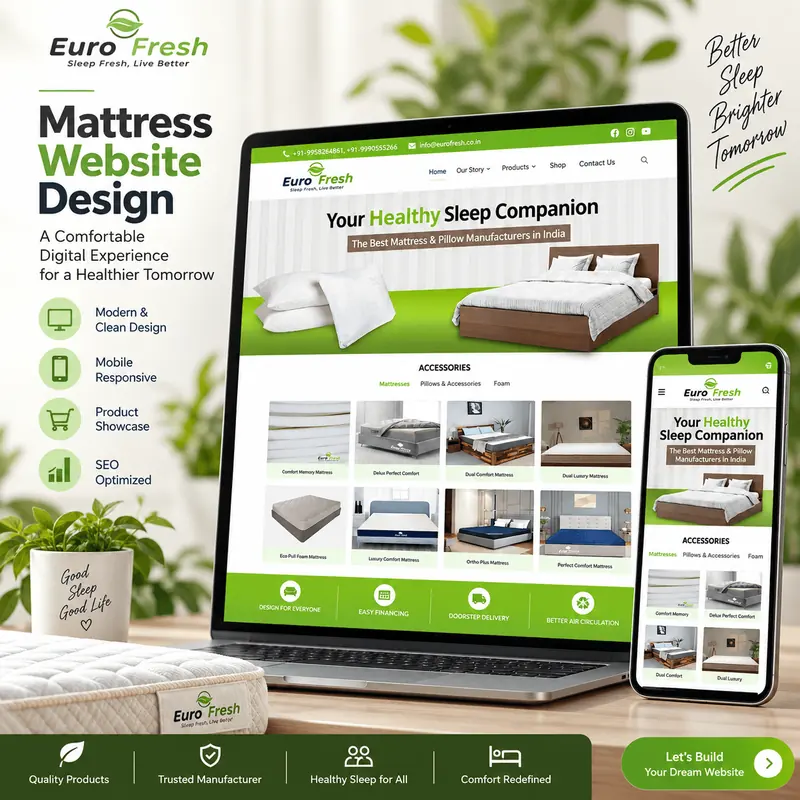
EuroFresh mattress and pillow store shown on laptop and phone
EuroFresh
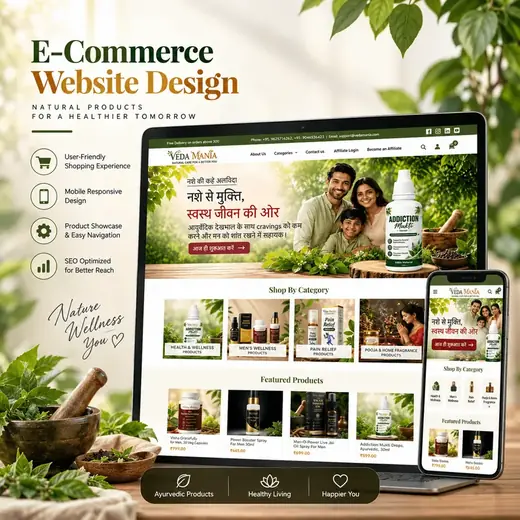
Veda Mania Ayurvedic ecommerce store shown on laptop and phone
Veda Mania
Eurotek industrial aerosol and cleaner manufacturer website shown on laptop and phone
Eurotek
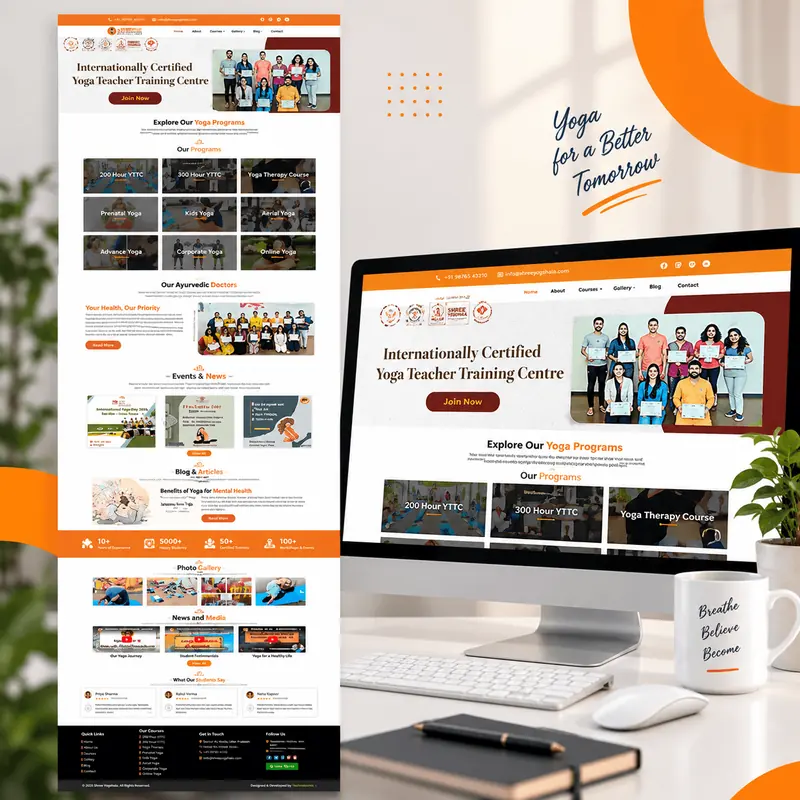
Shree Yogshala yoga studio and teacher-training website shown on laptop and phone
Shree Yogshala
CPCD City Paramedical College Delhi admissions website shown on desktop and phone
CPCD College
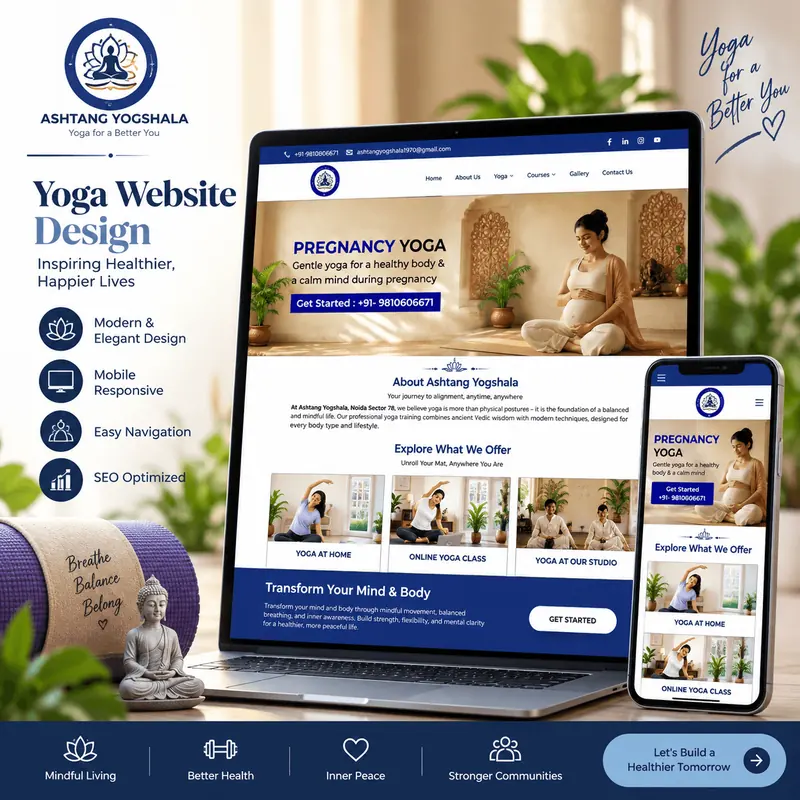
Ashtang Yogshala yoga studio website shown on laptop and phone
Ashtang Yogshala
Shree Yogshala teacher-training centre website shown on a desktop screen
Yogshala Training
Corporate gifts, awards and recognition retail

Joshi Trophy — Corporate Gifts & Trophy Ecommerce Store

A full ecommerce store with category-based navigation, cart and search, and trust messaging — bulk discounts and customised products — placed directly under the hero, serving single-item buyers and corporate bulk orders from the same storefront.

Home goods — mattress manufacturing and retail

EuroFresh — Mattress & Home Comfort Ecommerce Store

A product-led store with a tabbed structure (Mattresses / Pillows & Accessories / Foam) and an eight-product grid spanning entry-level foam through to premium orthopaedic and luxury lines.

Ayurvedic wellness products, ecommerce

Veda Mania — Ayurvedic Ecommerce Store

A storefront built natively for its audience’s language — category-based shopping, an affiliate programme and messaging written for its customers from the ground up, not translated from an English design. The same discipline a proper Arabic storefront needs.

Three different catalogue types — bulk-order corporate retail, a manufacturer’s own product range and a native-language wellness store — one underlying discipline: category structure, product presentation and checkout designed around how that audience actually buys.

Our process

How an Ecommerce Project Runs

  1. Commercial discoveryWhat you sell, catalogue size, who manages the store daily.
  2. Platform decisionWooCommerce or Shopify, decided against your actual operation.
  3. Catalogue architectureCategories, attributes, filtering, product data structure.
  4. Product data preparationCleaning and structuring your catalogue. Usually the longest stage, and the one clients underestimate.
  5. Design and buildStorefront, category and product templates, cart and checkout.
  6. VAT and tax configurationAED pricing, VAT treatment and TRN display set up correctly.
  7. Test ordersOn desktop and mobile, end to end through to order confirmation.
  8. LaunchGo live, redirects, SSL, tracking verified.
  9. TrainingHow to add products, process orders, run promotions, manage stock.
TechnoIconicStore estimate
PlatformWoo / Shopify
Catalogue size20 products or 2,000
Product data prepStructured
Filtering & searchBy how buyers choose
LanguagesEnglish + Arabic
TotalFixed quote
Written scope · agreed before work starts
Cost

What Shapes the Price of a Store

A 20-product store and a 2,000-product catalogue with filtering are very different builds. You get a written scope and fixed quote before work starts.

We don’t publish store packages — catalogue size and operations vary too much for a tier to mean anything useful. Tell us what you sell and roughly how many products and we’ll scope it properly.

Get Your Quote
Illustration of an analytics dashboard with a rising growth chart
Growth

Ready to Market From Day One

A store should be able to bring in traffic and show what is working from the day it goes live.

Marketing-ready Clean URLsUnique product metadataStructured product dataProduct feed structureEcommerce conversion tracking
FAQ

Ecommerce Questions, Answered

It depends on platform, catalogue size, how much product data preparation is needed, and whether you need multiple languages. A 20-product store and a 2,000-product catalogue with filtering are very different builds. You get a written scope and fixed quote before work starts. We don’t publish store packages — catalogue size and operations vary too much for a tier to mean anything useful. Tell us what you sell and roughly how many products and we’ll scope it properly.

The store is configured so pricing displays correctly relative to VAT, tax calculates at checkout, and invoices are formatted appropriately, with TRN display where applicable. Your accountant confirms the correct treatment for your business — we implement it, we don’t advise on it.

Neither is better in general. WooCommerce suits stores needing flexible customisation or sitting alongside substantial content. Shopify suits store-first businesses that want less technical overhead. See the comparison above — or tell us your catalogue size and how you operate, and we’ll recommend one.

Yes. On either platform your team can add products, update prices and stock, process orders and run promotions. You get a walkthrough at handover.

Yes, including product, customer and order data, with redirect mapping so existing search rankings survive the move.

Yes, it can be scoped as part of the project. The layout mirrors to right-to-left across navigation, product grids, filters, cart and checkout, with numerals, prices and order references kept correctly oriented. You supply the Arabic product-content translation; we build the storefront structure around it. This is scoped with its own timeline and testing phase rather than bundled into the standard build schedule.

More on this topic: Shopify stores · WordPress and WooCommerce · Website development · Landing pages · Website design · All UAE services

Tell Us What You Sell

Share what you sell, roughly how many products, and whether you need Arabic. We’ll recommend a platform and scope.