Business and corporate websites
Multi-page sites with structured service and company content, built on a CMS you can manage.

Turning an approved design into a website that’s fast, reliable and actually finished — tested properly, documented, and handed over with a walkthrough.
We reply on WhatsApp within 10 minutes.

Development is where most website projects quietly fail, and the failures look the same every time.
None of these are exotic problems. They’re what happens when development is treated as typing out a design rather than building something that has to keep working.
The site works on the developer’s machine and breaks on a two-year-old Android phone.
It scores well on a desktop speed test and takes six seconds on mobile data.
The contact form appears to submit but the email never arrives, and nobody notices for three weeks.
There’s no staging environment, so changes go straight to the live site.
When the project ends, nobody hands over credentials or documentation, so the next developer starts by reverse-engineering someone else’s work.
Multi-page sites with structured service and company content, built on a CMS you can manage.
Custom themes or controlled builder implementations. See WordPress website design in Dubai.
WooCommerce and Shopify implementations, including catalogue structure and checkout. See ecommerce website design in Dubai.
Lightweight, fast-loading standalone pages for ad traffic. See landing page design in Dubai.
Rebuilding or moving an existing site while preserving its search rankings.
If you already have approved designs from an internal team or another agency, we can build from them.
Everything is built and reviewed on staging. Nothing is edited directly on a live site — not during the build, not afterwards.
The approved design comes in, and the technical decisions get made before a line of template code is written.
Performance budget. We set a page-weight and load-time target before the build, not after. Retrofitting speed onto a finished site means undoing decisions that are already baked in.
Core templates first, then the moving parts.
Clean, semantic markup. Proper heading hierarchy, meaningful element structure, and markup that both search engines and screen readers can interpret.
Tested on real hardware, not just a resized browser window.
Real devices. We test on actual phones and tablets, including older Android devices, because that’s a meaningful share of UAE traffic.
Cross-browser. Chrome, Safari, Firefox and Edge, desktop and mobile. Safari on iOS behaves differently often enough that skipping it is how bugs reach production.
Going live is a checklist, and so is the week after.
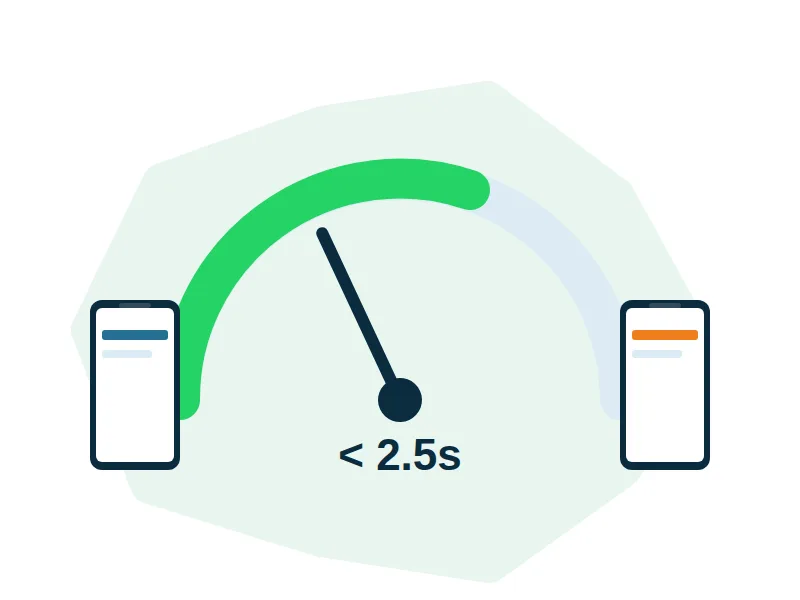
Tested on a throttled 4G mobile profile — not desktop broadband, which flatters every site.
How long before the main content is visible.
How responsive the page feels when tapped.
Whether content jumps while loading.
As light as the design allows. Directly affects load time on mobile data.
lang and hreflang markup, and layout handling planned from the template stageA form that submits successfully but doesn’t deliver is the most expensive bug in lead generation, because everything looks fine from the outside. Every form we build is tested end to end — submitted, received, and confirmed in the destination inbox — before launch and again after go-live.
It’s not a translation layer over an English template. The layout direction reverses, which affects CSS logical properties, flex and grid direction, icon mirroring, form field alignment and scroll behaviour. Where Arabic is in scope, we plan RTL handling into the templates from the start, because retrofitted RTL breaks in exactly the places nobody tests.
If the site currently ranks for anything, a careless rebuild can erase that overnight. Sites lose rankings in migration because the redirect map was an afterthought. It shouldn’t be.

WhatsApp click-to-chat is built with correct country code formatting and a pre-filled message, so a visitor lands in the chat with the context already written. Conversion events are tracked, so you can see which page produced each enquiry.
Real TechnoIconic projects for our existing clients — not UAE-based clients — shown as evidence of the build discipline described above: structured architecture, tested functionality, and a build that holds up once real traffic and real orders arrive.

A B2B, product-led website structured around six product categories — cleaners & degreasers, corrosion inhibitors, electrical insulation sprays, lubricants and penetrants, auto care products, and aerosol paint sprays — with a section presenting the manufacturing facility and production capacity.
What changed: the site had to work for a procurement manager comparing specs and a distributor judging manufacturing scale, so credibility signals sit directly beside the product range instead of on a separate About page.

A product-led ecommerce site with a tabbed accessories structure (Mattresses / Pillows & Accessories / Foam) and an eight-product grid spanning the range, from entry-level foam to premium orthopaedic and luxury lines.
What changed: shoppers comparing mattresses see specs and options side by side, scanning the full range and narrowing down before opening a single product page — the same principle a UAE ecommerce catalogue needs.

An ecommerce store serving single-trophy buyers and bulk corporate orders side by side.
What changed: bulk-discount and customisation options sit directly beneath the hero, so a one-off trophy buyer and a company ordering in volume each find their own way in.
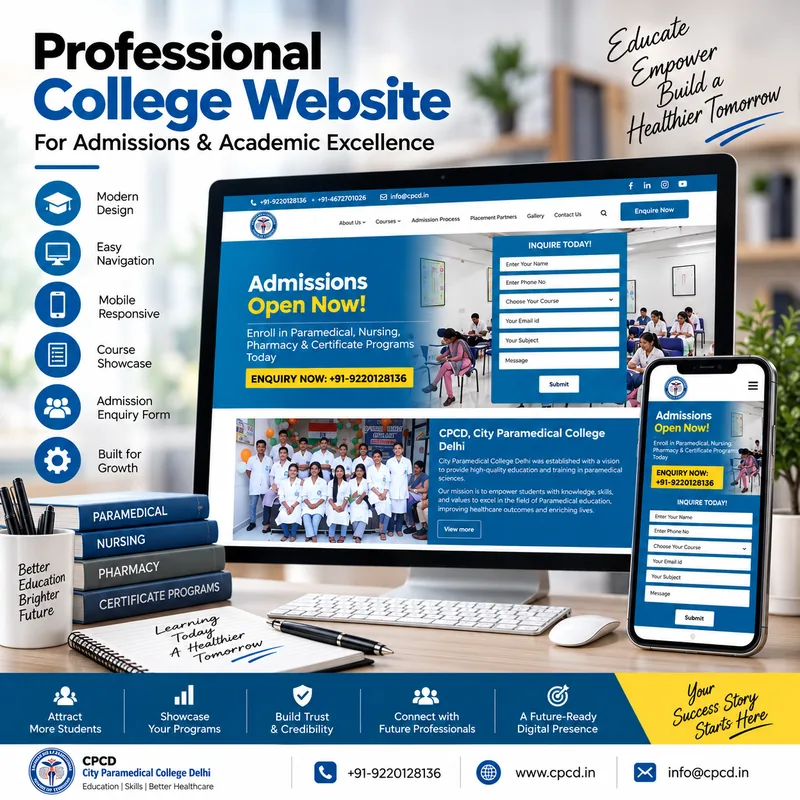
An admissions-focused college website with the enquiry form and phone number on the first screen.
What changed: a prospective student or parent can enquire the moment they land, instead of hunting through course pages for a contact route.
Yes, subject to a review of the files and what’s technically feasible. If something in the design will cause performance or usability problems, we’ll flag it before building rather than after.
Often. We audit the current build and identify what’s actually causing the problem — frequently it’s images, scripts and caching rather than the site itself. If targeted fixes will do, that’s what we’ll recommend.
It can, if handled carelessly. That’s why URL mapping and 301 redirects are planned before the build starts, not after launch. We preserve existing URLs where possible and redirect everything that changes, then monitor Search Console through the transition.
By setting performance targets before the build and testing on a throttled mobile connection, not desktop broadband. Image handling, script loading and caching are decided during development rather than patched afterwards.