

7 years in business · 50+ projects delivered

Shopify Website Design & Development in Dubai

A Shopify store that looks like your brand rather than its theme — set up properly for UAE customers, from collections through to a checkout that converts on mobile.

We reply on WhatsApp within 10 minutes.

Woman building a Shopify online store on a laptop with the Dubai skyline and Burj Khalifa behind her
  • Theme matched to your brand
  • Collections & navigation
  • Product pages built to sell
  • Apps — only what’s needed
  • VAT configured
  • Mobile checkout
Illustration of a Shopify-style online store with product shelves, a shopper and a checkout counter
Before you build

Shopify Is Easy to Launch and Easy to Get Wrong

Shopify’s appeal is real: the platform stays up during a traffic spike, and your team can run the store without a developer on call.

What Shopify handles

  • Security and updates
  • Staying up in a traffic spike
  • Day-to-day running without a developer on call

What it leaves to you

  • Theme selection
  • Collection structure
  • Which apps you install
  • How the product page is built

Those choices decide whether the store sells — and they’re where most stores lose money. The common failure: a theme bought and lightly edited, fifteen apps installed over six months, and a store that now loads slowly with nobody sure which app is responsible.

Theme decision

Theme: Bought, Customised, or Custom?

We’ll recommend the right level based on your catalogue, brand and budget rather than defaulting to the most expensive option.

Two routes

Theme-based

Standard theme, lightly configured

Fastest and cheapest. Appropriate for a first store testing a market. The store will look like its theme, and competitors using the same theme will look similar.

Theme with substantial customisation Most businesses

The practical middle ground. A well-built theme as the foundation, customised so the store reflects your brand — typography, colour, spacing, section layouts, and custom sections where the theme’s defaults don’t fit.

One route

Custom theme

Built from scratch Full control

Made for a specific brand and requirement. Highest cost, full control, and worth it when the store is the business rather than a channel.

Whichever route: theme choice affects speed. Multipurpose themes that bundle dozens of unused features carry that weight on every page load. A leaner theme customised properly usually outperforms a feature-heavy one configured lightly.

Illustration of a store planning checklist with ticked items, a clipboard and a pencil
Store structure

How the Store Is Organised

The unglamorous groundwork that makes everything downstream work.

Collections

How products group, and whether a product sits in several collections. Automated collections update themselves by rule; manual ones give precise control. Most stores need both.

Navigation

Customers shouldn’t need more than two or three taps to reach a product category. Menu depth is a decision, not a default.

Filtering

Which attributes customers actually narrow by. This depends on your products having clean, consistent tags and metafields.

Search

On larger catalogues, search overtakes navigation as the primary route to a product. Worth configuring rather than accepting as-is.

Product pages

Images with multiple angles and scale, clear pricing with VAT treatment stated, honest availability, obvious variant selection, and an add-to-cart that’s always reachable on mobile.

Built for the UAE

Setting Up for UAE Customers

Currency and pricing

AED as the default display currency, with multi-currency if you sell across the GCC.

AED

VAT

Tax configured so pricing displays correctly, calculates properly at checkout, and appears appropriately on order confirmations, with TRN where applicable.

Arabic storefront

Proper right-to-left handling — navigation, product grids, filters, cart drawer and checkout fields mirrored.

Language support and right-to-left layout are two different things. A theme can serve Arabic text inside a left-to-right layout, which reads wrong immediately. Where Arabic is scoped, we keep prices and order numbers correctly oriented and configure typography for Arabic. You supply the Arabic product-content translation; we build the storefront structure, RTL layout and typography around it. This would be a first build of its kind for us, so it’s planned with its own realistic timeline.

Apps

Apps: Fewer Is Better

Every app adds monthly cost, usually adds page weight, and occasionally conflicts with another app or a theme update. Our approach:

  • Install an app only when it solves a problem the theme or platform can’t
  • Prefer one app doing three things over three apps doing one each
  • Check that an app is actively maintained before relying on it
  • Remove leftover code when an app is uninstalled — many leave fragments behind that keep loading
  • Review the app list periodically against what’s actually being used
Illustration of a speed gauge dial showing a fast page load time on a mobile phone
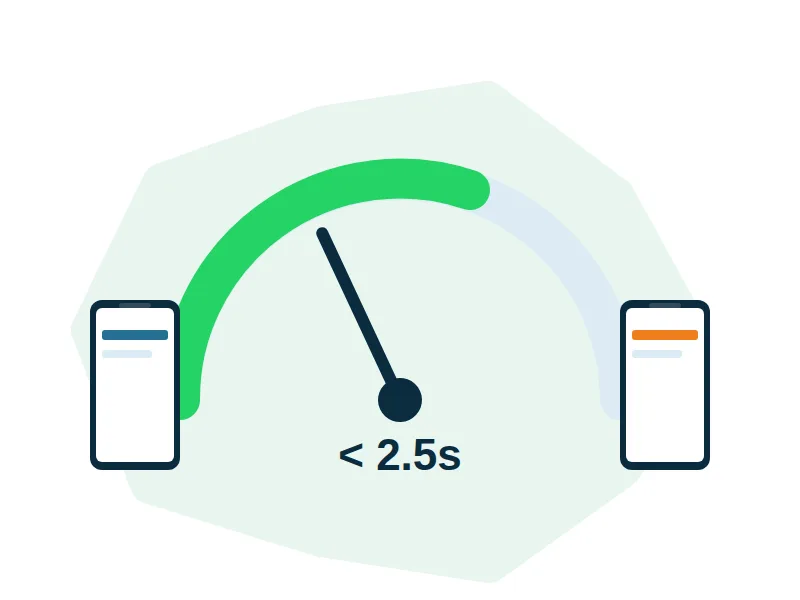
< 2.5s LCP — target on a throttled 4G mobile connection, the condition most of your customers are actually browsing in.
Store speed

Shopify Keeps the Store Online. Speed Is Still Largely Yours.

  • Theme weight — the single biggest factor
  • Images sized and compressed correctly rather than uploaded at full resolution
  • App scripts loading on every page when they’re only needed on one
  • Custom code accumulated in the theme over time
  • Too many variants or collection images loading at once
Migration

Migrating to Shopify

Moving from WooCommerce, Magento or another platform:

Product, customer and order data exported, transformed and verified against the source

Full URL inventory with redirect mapping — Shopify’s URL structure differs from most platforms, so nearly every product and collection URL changes

Existing metadata preserved where it’s earning traffic

Test orders before switching over

Search Console monitored through the transition

Stores lose rankings in migration for one reason above all: the redirect map was treated as a launch-day task rather than a planning-stage one.

Selected work

Recent TechnoIconic Ecommerce Projects

Real TechnoIconic work, shown for the catalogue and storefront thinking behind it — not UAE clients. The platform for a store is chosen to fit the business, and we can tell you which suits yours.

Joshi Trophy corporate gifts and trophy ecommerce store shown on laptop and phone
Corporate gifts, awards and recognition retail

Joshi Trophy — Trophy & Corporate Gifting Store

Built around three category groups with cart and search always in view. Bulk-discount and customisation messaging near the top speaks to organisations ordering in volume, while individual buyers get a plain route to a single product.


EuroFresh mattress and pillow manufacturer ecommerce store shown on laptop and phone
Home goods — mattress manufacturing and retail

EuroFresh — Mattress & Home Comfort Store

Separates Mattresses, Pillows & Accessories and Foam into tabs, with an eight-product grid running from entry-level foam to premium orthopaedic and luxury options, so shoppers compare the range before opening a product page.

Our process

How a Shopify Project Runs

  1. 1

    Discovery

    Products, catalogue size, who runs the store daily, which Shopify plan fits.

  2. 2

    Store setup

    Account configuration and base settings.

  3. 3

    Theme decision and build

    Selection and customisation, or custom build.

  4. 4

    Product and collection structure

    Catalogue organisation, tags, metafields, filtering.

  5. 5

    Product upload

    Import and verification. Usually the longest stage if product data isn’t already clean.

  1. 6

    Tax

    VAT configuration.

  2. 7

    Apps

    Only what’s needed, configured and tested.

  3. 8

    Test orders

    Desktop and mobile, through to order confirmation.

  4. 9

    Launch

    Switch-over, redirects, tracking verified.

  5. 10

    Training

    Adding products, processing orders, running promotions, managing stock.

After handover

What You Can Run Yourself

Run it without a developer on standby

Shopify’s admin is straightforward, and you get a walkthrough at handover so your team can manage the store day to day.

Add products

Process orders

Run promotions

Manage stock

FAQs

Shopify Questions, Answered

Yes — store setup, theme, collections, product structure, tax and training. You’ll be able to run it without a developer on standby.

Yes. We review the current theme, app list, collection structure and speed, then identify what’s actually limiting performance. Often the fix is theme customisation and app cleanup rather than a full rebuild — we’ll tell you which.

It depends on order volume, how many staff accounts you need, and which features you’ll use. Starting on a lower plan and upgrading as volume grows is usually sensible — the plan is easy to change, unlike the store structure.

Large catalogues are not a problem. What matters more is how products are organised, tagged and filtered — a badly structured catalogue of 300 products is harder to shop than a well-structured one of 3,000.

Yes, it can be scoped as part of the build. Shopify handles multiple languages natively, but the theme needs proper right-to-left handling — otherwise Arabic text sits inside an English layout, which reads wrong immediately. We mirror navigation, product grids, filters, cart and checkout, and configure Arabic typography separately. You supply the translated product content. Since this would be a first project of this kind for us, we’d agree a realistic timeline with proper testing built in.

Yes. Shopify’s admin is straightforward, and you get a walkthrough at handover covering adding products, processing orders, running promotions and managing stock.

Yes, including product, customer and order data, with redirect mapping so search rankings survive the platform change.

Depends on your operation, not on which is better in general. There’s a full comparison on our ecommerce website design page, or tell us your catalogue size and how you work and we’ll recommend one.

Illustration of a WhatsApp conversation between a store owner and a web designer on a phone

Building a Store, or Fixing One?

Share what you sell, roughly how many products, and whether this is a new store or an existing one that isn’t performing.